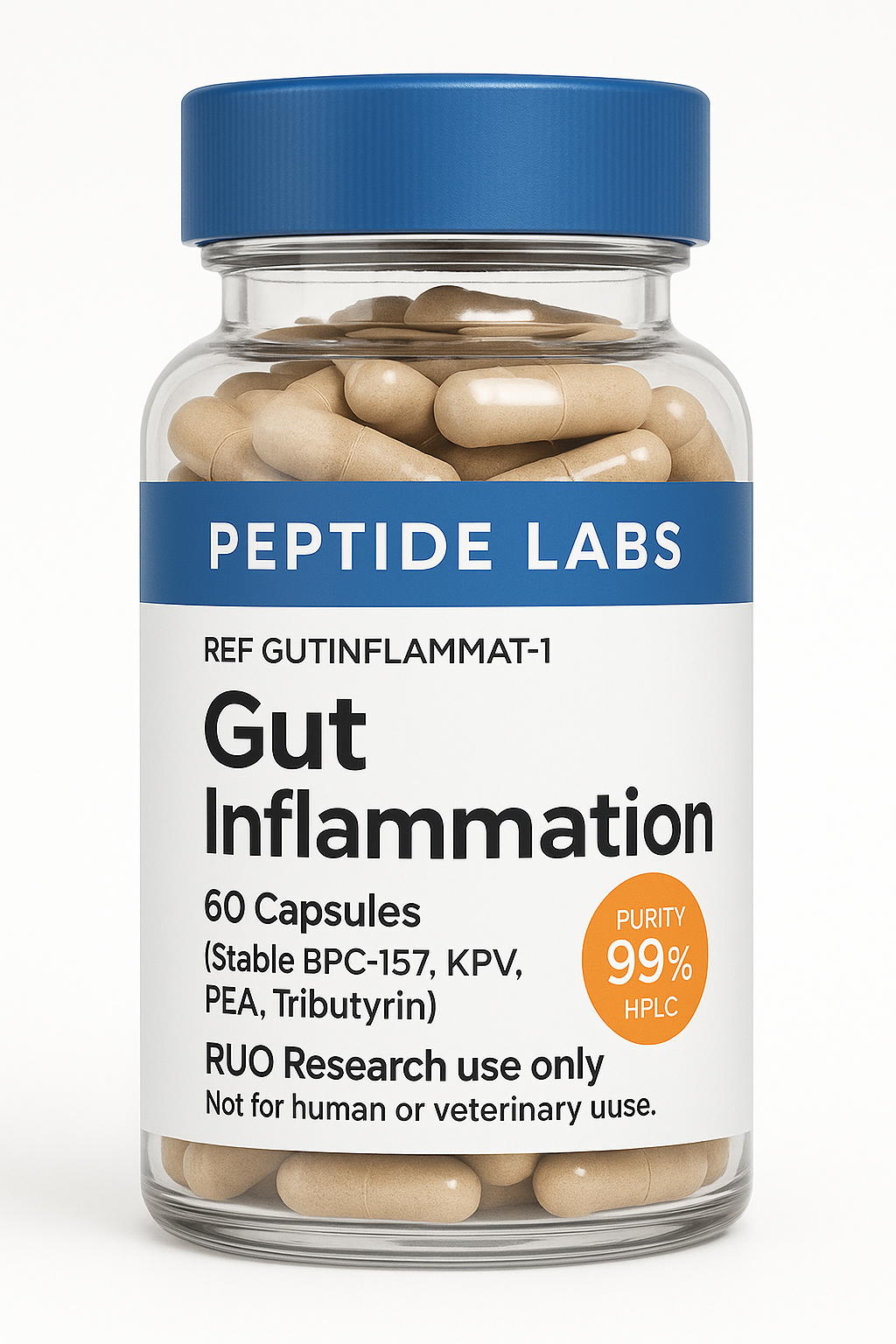
Gut Inflammation (60 Capsules) (Stable BPC-157, KPV, PEA, Tributyrin)
Original price was: $169.99.$49.99Current price is: $49.99.
 15,000+ Orders Shipped!
 Verified COA's
 Fast, Protected Shipping
Premium research peptide manufactured to 99% purity standards. For research purposes only. Not intended for human consumption. All products include ce…
Premium research peptide manufactured to 99% purity standards. For research purposes only. Not intended for human consumption. All products include certificate of analysis.
Each capsule contains 500mcg Stable BPC-157 Arginate, 500mcg KPV, 400mg PEA, 400mg Tributyrin
BPC-157 Arginate Salt is a synthetic derivative of naturally occurring body protection compound (BPC), known for its anti-inflammatory and wound healing properties. BPC-157 arginate is stable in human gastric juice, during prolonged storage, and when exposed to UV light. It possesses enhanced oral bioavailability (greater than 90%). Research shows just 5% degradation after 5 hours in gastric acid as compared to 98% for standard BPC 157. Animal studies indicate that BPC157 arginate may significantly improve gastrointestinal healing from ulcers, colitis, irritable bowel syndrome, and other inflammatory bowel diseases.
KPV is an anti-inflammatory peptide that has potential to help decrease inflammation in a wide range of intestinal diseases such as Crohn’s disease and Ulcerative Colitis. It decreases the inflammatory response by inhibiting proinflammatory cytokine synthesis and secretion. KPV has been shown to stop the proinflammatory mechanisms in both intestinal epithelial cells and immune cells. KPV has shown promise in the case of Inflammatory Bowel Diseases through inhibited immune responses. KPV has also been shown to support healing of the mucosal lining of the gut which helps to stabilize Ulcerative Colitis. In one study KPV was given to mice with Ulcerative Colitis. These mice experienced significant improvements in body weight, colon length and disease symptoms.
PEA is a fatty acid amide molecule involved in a variety of cellular functions in chronic pain and inflammation. It has been shown to have neuroprotective, anti-inflammatory, anti-nociceptive (antipain) properties. The most important and promising indications for PEA are linked to neuropathic and chronic pain and inflammation such as gastro-intestinal inflammation, diabetic neuropathic pain, sciatic pain, CRPS, pelvic pain and entrapment neuropathic pain.
Tributyrin is a natural triglyceride that decreases inflammatory signaling by TNF-alpha, interleukin-1B, and interleukin-6. Studies show that Tributyrin regulates tight junctions to bolster intestinal barrier function. This may help to reduce the number of inflammatory particles that cross from the intestinal lumen (where food is) into the body, thereby preventing gut inflammation from starting. It also boosts expression of vitamin D3 receptors. Studies show that Tributyrin regulates tight junctions to bolster intestinal barrier function.Tributyrin may improve immune function, increase mucus production in the GI tract, and accelerate gastrointestinal wound healing.
Synergy Between BPC 157, KPV, PEA, and Tributyrin
Individually, BPC 157, PEA, Tributyrin, and KPV offer substantial benefits in fighting inflammation, particularly of the GI tract. In combination, the four act synergistically to regulate inflammation via several different but overlapping pathways. Together, these four compounds can help produce enhanced anti-inflammatory effects by:
• reducing cyclooxygenase-2 signaling,
• substantially reducing TNF-alpha levels,
• activating nuclear transcription factors responsible for controlling the immune system,
• improving gastric mucous secretion and function
• enhancing intestinal barrier function.